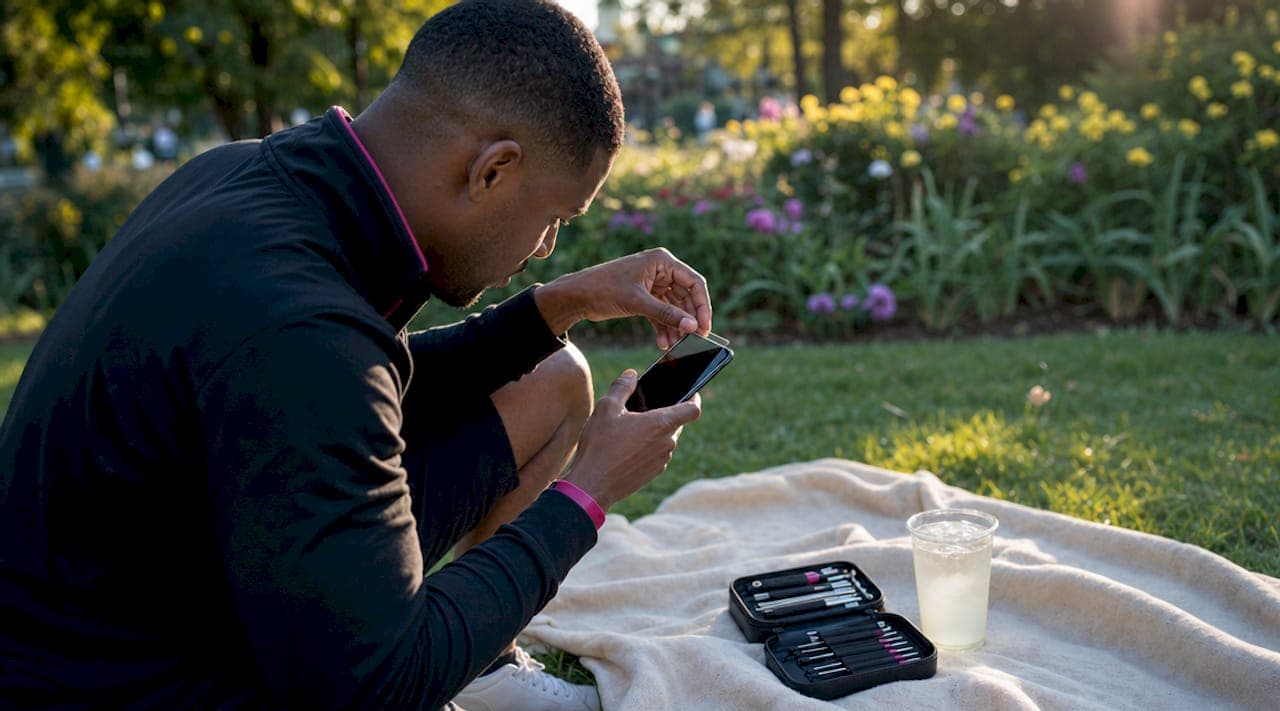
A screen protector reduces repair costs by acting as a sacrificial layer that absorbs scratches and minor impacts before your phone's actual display takes the hit. Understanding how screen protector prevents repair costs comes down to simple math: a tempered glass protector costs $10 to $30, while a single screen repair on a modern iPhone or Samsung Galaxy runs $100 to $399. One avoided repair pays for years of protectors. Proactive preventive maintenance reduces emergency repair expenses by 50 to 70 percent, and that principle applies directly to your phone screen.
How screen protectors absorb damage to prevent cracks and scratches
A screen protector works as a sacrificial barrier that takes the damage so your phone's native display does not have to. Tempered glass protectors, in particular, are engineered to absorb surface scratches and distribute the force of minor impacts across their own surface. When the protector cracks or scratches, you replace a $15 piece of glass instead of a $200 display assembly.
Pocket grit is one of the most underestimated threats to your screen. Keys, coins, and fine debris create micro-abrasions over time that dull your screen's oleophobic coating and reduce touch sensitivity. A protector takes that daily wear so your display stays clear and responsive for years longer than it would otherwise.
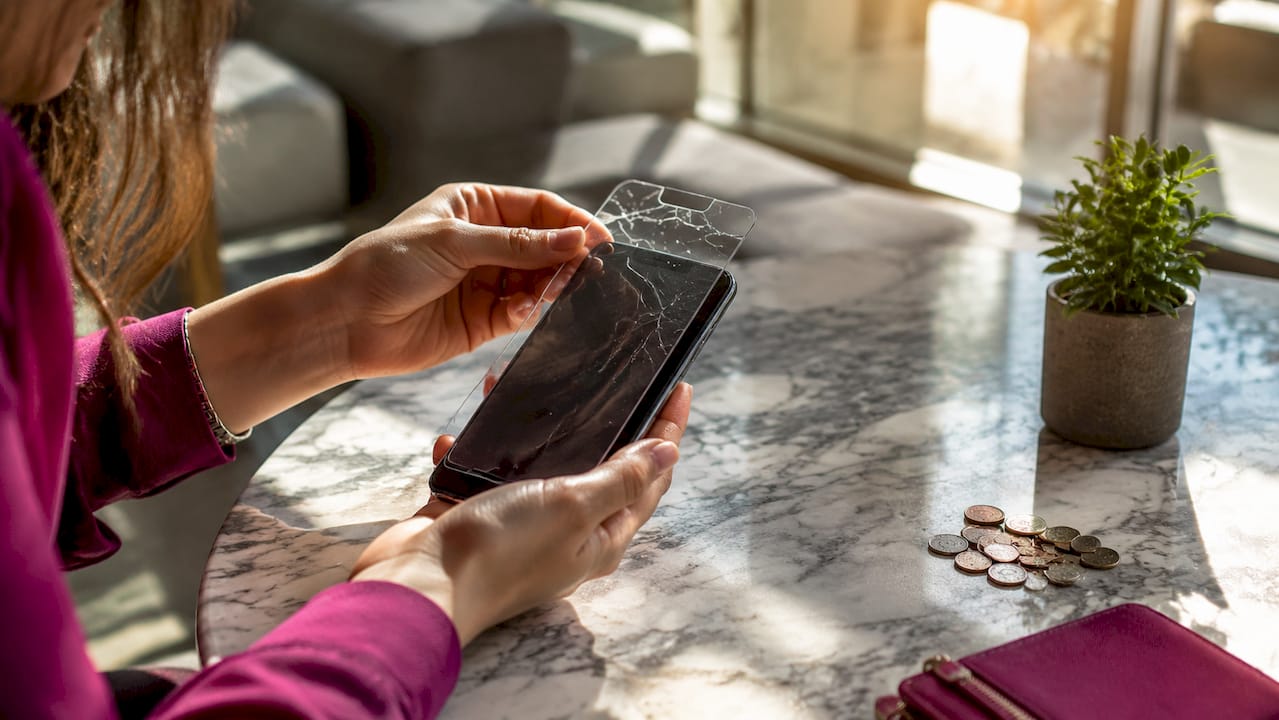
Not all protectors offer the same level of defense. The screen protector advantages you get from a quality tempered glass option are meaningfully different from a thin plastic film. Tempered glass is harder, more impact resistant, and less likely to peel at the edges over time.
Pro Tip: Look for a protector rated 9H hardness. That rating means the surface resists scratching from materials up to and including most keys and coins, which are the most common culprits in everyday pocket damage.
Key factors that determine how effective your protector actually is:
- Full edge coverage: A protector that stops short of the screen edges leaves the most vulnerable zone exposed.
- Proper adhesion: Air bubbles or lifting edges allow grit to get underneath, bypassing the protection entirely.
- Thickness: Thicker tempered glass (0.3mm to 0.5mm) absorbs more impact force than ultra-thin film options.
- Case compatibility: Some protectors lift at the edges when paired with certain cases, reducing adhesion over time.
Screen protector cost vs. screen repair cost: the real numbers
The cost comparison between screen protection and screen repair is not close. A quality tempered glass protector costing $10 to $15 can save you $76 to $384 in repair costs, with screen repairs ranging from $91 to $399 depending on your device model. That gap is the core argument for cost-saving screen protection.
Here is what the numbers look like across common devices:
| Device | Avg. Screen Repair Cost | Avg. Protector Cost | Potential Savings |
|---|---|---|---|
| iPhone 15 | $279 | $15 | $264 |
| Samsung Galaxy S24 | $230 | $20 | $210 |
| Google Pixel 8 | $199 | $15 | $184 |
| Budget Android | $91 | $10 | $81 |
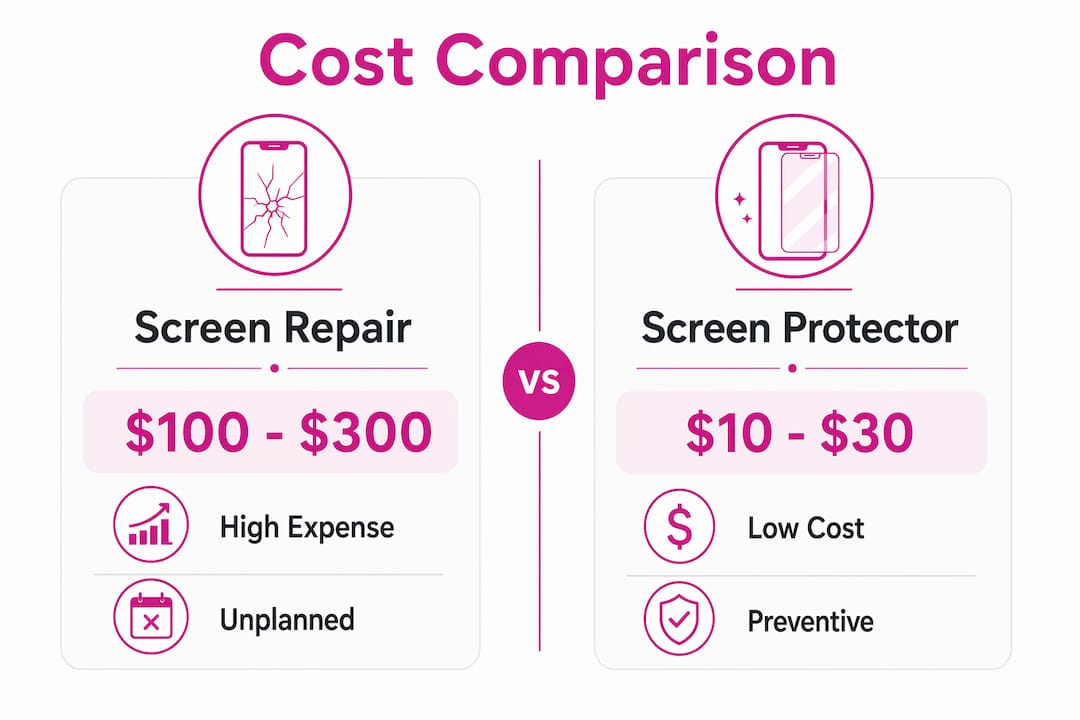
Even if you replace your protector twice a year at $15 each, you spend $30 annually on screen protection. One avoided screen repair on a mid-range phone saves you six to nine years' worth of protector costs in a single incident. The economics of screen protection rely on exactly this math: one prevented repair event covers many protector purchases.
You can also check iPhone screen replacement costs in Denton, TX to see what local repairs actually run, which makes the savings comparison even more concrete for your specific device.
Typical screen protector costs range from $10 to $30, while screen repairs typically fall between $100 and $300. That ten-to-one cost ratio is why screen protectors rank among the highest-return accessories you can buy for your phone.
How combining protectors, cases, and warranties maximizes savings
A screen protector alone handles scratches and minor surface impacts well. It does not fully protect against a hard corner drop onto concrete. PCMag's 2026 guidance is direct on this point: a case is strongly recommended alongside a protector for drop protection. The two work together in a way neither does alone.
High-cost screen damage typically occurs on corners and angled drops. Without a case absorbing that initial impact force, the protector faces the full energy of the fall. With a case, the drop energy is distributed and reduced before it ever reaches the screen. That combination is the most reliable way to reduce repair expenses over the life of your device.
Protection plans add another layer. Samsung Care+ and Pixel Care+ offset repair costs when damage does occur, and using a protector reduces how often you need to file a claim. Fewer claims mean lower long-term costs and no risk of hitting a plan's annual claim limit.
Pro Tip: Schedule a protector replacement every six months, even if it looks fine. Micro-scratches you cannot see clearly still degrade impact absorption. Treating it like a maintenance task, similar to changing a car's air filter, keeps your defense at full strength.
Here is a practical layered protection checklist:
- Pair a 9H tempered glass protector with a case that has raised edges around the screen.
- Enroll in a manufacturer protection plan if you own a flagship device worth $600 or more.
- Inspect your protector monthly for lifting edges or visible cracks.
- Replace the protector immediately when you see damage. Do not wait.
Preventive maintenance for devices follows the same logic as laptop repair before replacement: small, regular investments prevent large, unexpected costs.
Common misconceptions about screen protectors and how to avoid them
The biggest misconception is that a screen protector makes your phone indestructible. It does not. A protector reduces the likelihood and severity of screen damage. It does not guarantee zero cracks under all conditions. Setting realistic expectations helps you use protectors correctly rather than feeling let down when a hard drop still causes damage.
Here are the most common mistakes people make, and how to fix them:
- Ignoring a cracked protector. Replacing a cracked protector promptly prevents cracks from spreading to the display. Many users wait weeks, and small cracks propagate into full screen failures that cost hundreds to fix.
- Buying the cheapest option available. Low-quality protectors degrade faster, peel at the edges, and provide less impact absorption. A $5 protector from an unknown brand often costs more in the long run because it needs replacing every few weeks.
- Installing it with air bubbles or dust underneath. Poor installation lets grit bypass the protector entirely. Proper fit and edge coverage matter greatly. Clean your screen with the included alcohol wipe, use the alignment tool if provided, and take your time.
- Skipping a protector on "durable" phones. Gorilla Glass and similar technologies improve scratch resistance but do not eliminate it. Even Corning's toughest glass scratches at hardness level 6 on the Mohs scale, which means everyday sand and quartz particles still cause damage.
- Not pairing the protector with a case. Screen protectors are best used against scratches and minor impacts. Cases handle drops. Using only one leaves a gap in your protection strategy.
If you are weighing whether a damaged screen is worth repairing at all, the cracked screen repair vs. replace guide from The-tech-savvy-gal breaks down the decision clearly.
Key takeaways
A screen protector prevents repair costs by absorbing scratches and impacts before they reach your display, and one avoided repair covers years of protector purchases.
| Point | Details |
|---|---|
| Protectors act as sacrificial layers | They absorb scratches and minor impacts so your native display stays intact. |
| Cost savings are significant | A $15 protector can prevent a $100 to $399 screen repair on most devices. |
| Layered protection works best | Combining a tempered glass protector with a case covers both scratch and drop scenarios. |
| Replace damaged protectors immediately | Cracked protectors that go unreplaced allow damage to spread to the actual screen. |
| Fit and quality determine effectiveness | Poor adhesion or cheap materials reduce protection and increase long-term costs. |
Why I stopped thinking of screen protectors as optional
I used to treat screen protectors as a nice-to-have. Then I watched a customer come in with a Galaxy S23 that had a hairline crack running the full length of the display. She told me the protector had cracked two weeks earlier and she had not gotten around to replacing it. That repair cost her $220. A new protector would have cost $18.
What I have observed consistently is that the people who skip protectors or delay replacing damaged ones are the same people who end up needing the most expensive repairs. It is not bad luck. It is a predictable outcome of removing the sacrificial layer from the equation.
The other pattern I see is people buying the cheapest protector they can find and then being surprised when it peels or cracks within a month. Spending $20 on a reputable brand instead of $5 on a generic one is not an upgrade. It is the difference between protection that works and protection that looks like it works.
My honest recommendation: buy a quality tempered glass protector, pair it with a case that has a raised bezel, and replace the protector the moment you see visible damage. That three-part habit costs less than $50 a year and eliminates the majority of repair scenarios I see every week at The-tech-savvy-gal.
— Gwensheca
When you need professional help in Denton, TX
Even the best screen protector cannot prevent every repair situation. When your phone does need professional attention, The-tech-savvy-gal offers same-day phone repair in Denton, TX with certified technicians and quality parts backed by a warranty. From screen replacements to battery upgrades, every repair is done right the first time.
The-tech-savvy-gal also offers professional protector installation so you get a bubble-free, perfectly fitted result that actually holds up. Check out the full list of repair and protection services to see how the team can help you protect your device and your wallet. Locals in Denton and surrounding areas trust The-tech-savvy-gal for honest pricing, fast turnaround, and repairs that last.
FAQ
How much can a screen protector save on repairs?
A quality tempered glass protector costing $10 to $15 can prevent screen repairs that run $91 to $399 depending on your device model. One avoided repair covers years of protector purchases.
Does a screen protector stop a phone screen from cracking?
A screen protector reduces the likelihood and severity of cracks but does not guarantee zero damage under all conditions. Pairing it with a protective case significantly improves drop resistance.
How often should you replace a screen protector?
Replace your protector immediately when you see cracks or lifting edges, and consider a scheduled replacement every six months even if it looks intact. Micro-scratches degrade impact absorption over time.
Is a tempered glass protector better than a plastic film?
Tempered glass protectors rated 9H hardness offer stronger scratch resistance and better impact absorption than plastic film options. They also maintain screen clarity and touch sensitivity longer.
Do screen protectors work with Samsung Care+ or Pixel Care+?
Yes. Using a screen protector alongside plans like Samsung Care+ or Pixel Care+ reduces how often you need to file a claim, lowering your long-term out-of-pocket costs across the life of your device.